You're Probably Doing Fine. Except in One Area.
Oct 01, 2026DO HARD THINGS NATION • FIELD NOTES
You're Probably Doing Fine. Except in One Area.
What DO H.A.R.D. THINGS actually means, and the daily question that keeps you honest
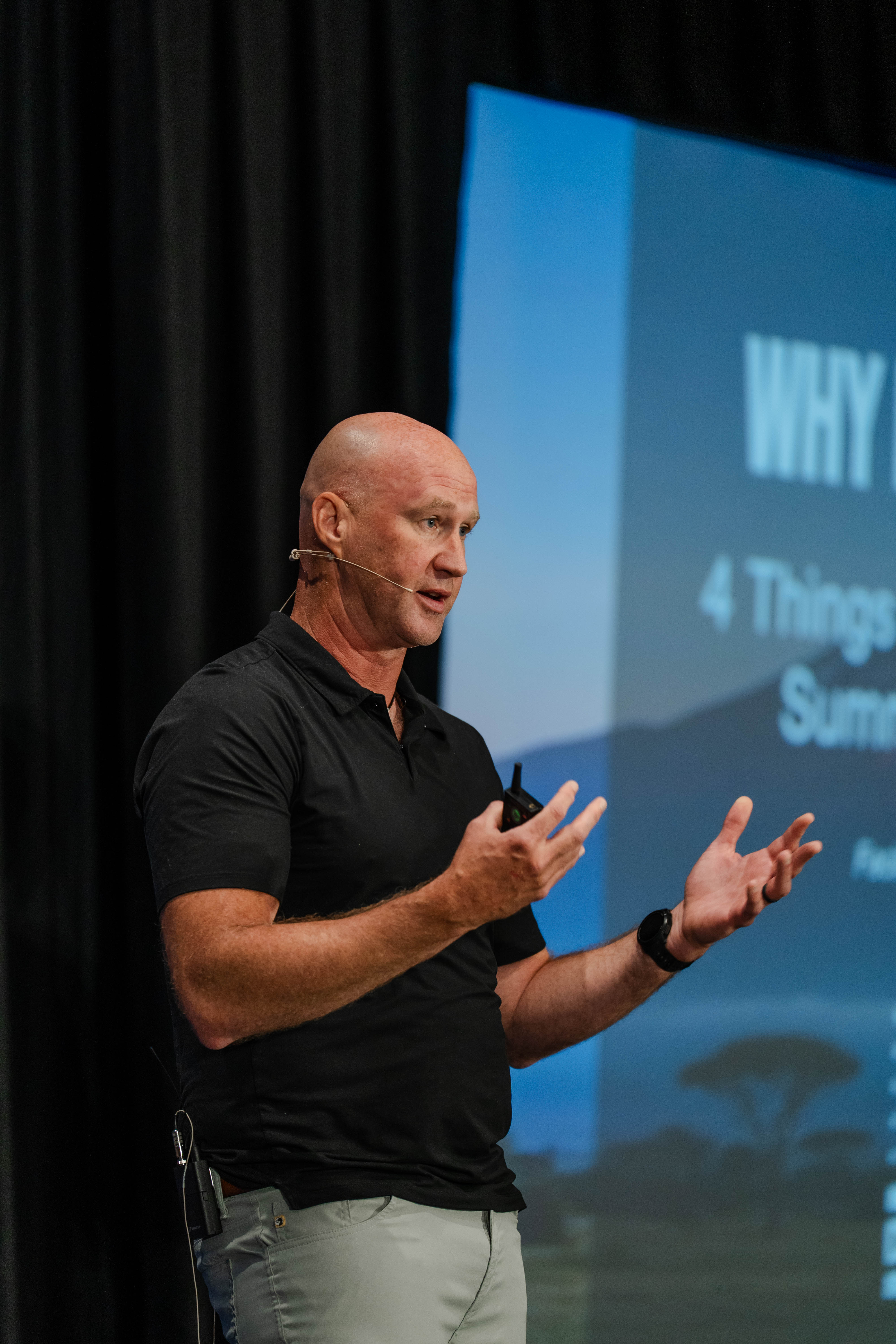
By Siegfried "Sig" Tiegs Columbia, Missouri
Most people I talk to are doing fine. Not just fine, good, in most areas of their life. But there's usually one arena where they're getting crushed, and they already know which one it is before I ask.
The guy who's killing it at work hasn't been to the gym in two years. The woman in the best shape of her life is drowning in credit card debt. The couple with the nice house hasn't had a real conversation in months.
One area drags, and eventually it starts pulling the others down with it.
What the words actually mean
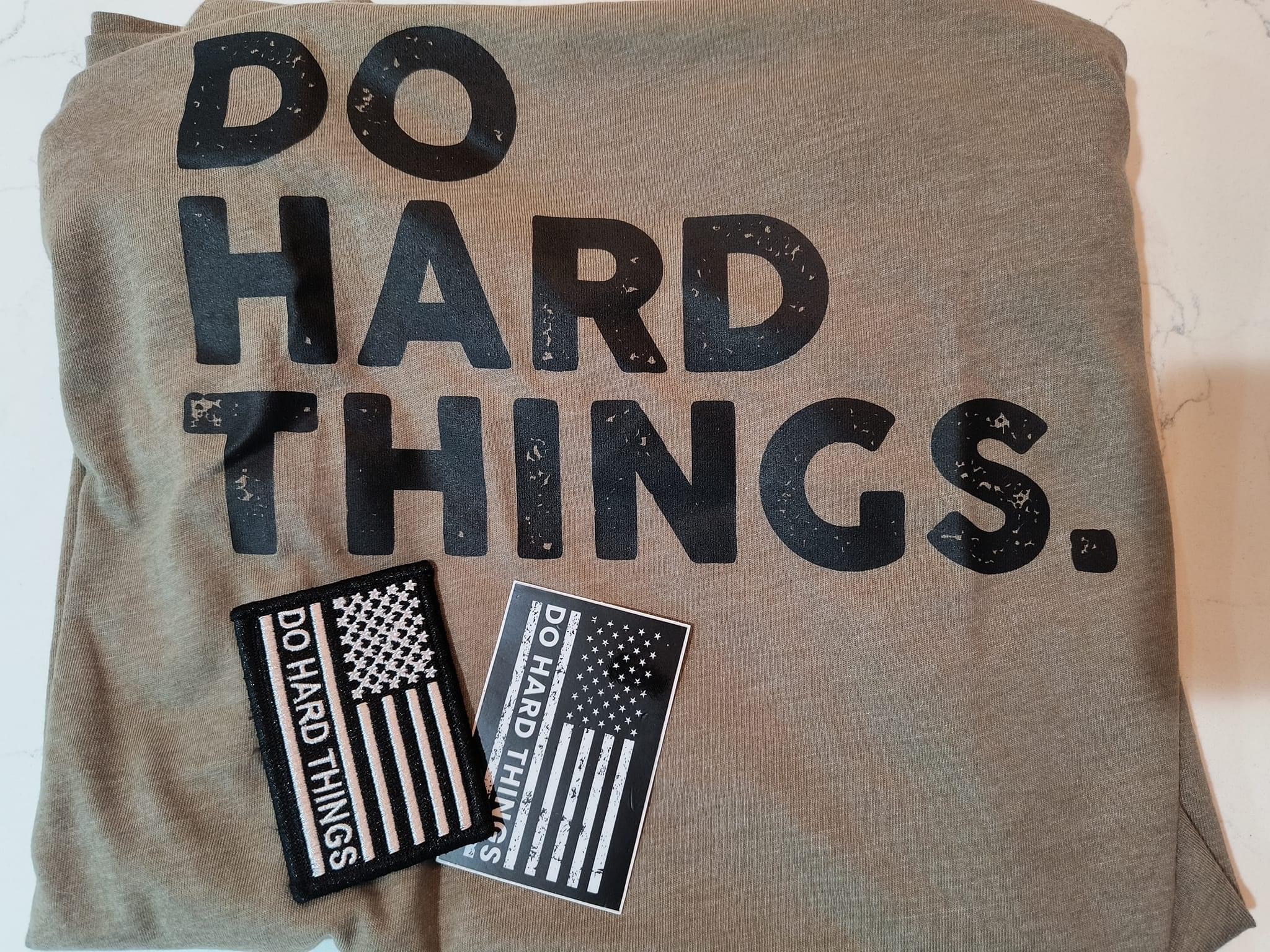
When I wrote Life on Offense, I built the framework out of the name itself.
DO means taking action. Not reading about it, not planning it. Doing it.
HARD is the four arenas of your life: Health and wellness, Affluence and wealth, Relationships, and Development.
THINGS means the things that matter. Pareto principle, the twenty percent that actually moves your life, not the eighty percent that's busy work dressed up as progress.
Put it together and it's one sentence. Take action, in the four arenas, on the things that matter.
If you want a life that's peaceful, powerful, and productive, those are the four you have to show up for deliberately. Neglect one long enough and it takes the rest with it.
Why most people never notice
Most people are living in reaction. Defense. Comfort zone. Getting by, making ends meet, and not paying close attention to any of it.
I've watched a lot of men live the same year over and over. I call it looping. They've got responsibilities, they've got things they have to do, and the years start running together. Then one day they wake up and ask how they got here.
In the Army we ran an after action review at the end of every mission. Four questions, every single time. What was supposed to happen. What actually happened. Why. And what do we do differently next time — the pluses and the minuses both.
That's how units get better. Not talent. Not luck. A standing habit of looking honestly at what just happened.
Almost nobody does that with their own life.
A good question will stop you in your tracks. That's the whole idea behind what we're starting this week.
H — Health and Wellness
When I think about health, I think about energy management.
There's your lifespan, which is your chronological age, and there's your healthspan, which is the quality of your energy inside that age. I'm forty-eight as I write this. Things don't operate the way they did ten or twenty years ago. But I'm trying to hold the highest level of energy I can for as long as I possibly can.
I believe we're a spirit having a human experience, and this body is what God gave us to do it in. My heart beats without me asking. I breathe without thinking about it. I've got opposable thumbs. Humans are the ultimate endurance animal. This machine is what I have to navigate my life with, and I want it running like one of those Toyotas with a million miles on it that just keeps going.
Jim Rohn said you have to take care of your body because it's the only place you have to live. That's it. That's the whole argument.
If you're tired, overweight, stressed out and running on caffeine, that's going to show up in how you lead, how you parent, and who you are at home. It's hard to be a great anything when you're exhausted.
I think about it as four energy centers, and they stack.
Physical energy is the quantity, movement, nutrition, sleep, hydration, stress. Emotional energy is the quality, and it sits directly on top of the physical. If I don't sleep well, my mood the next day is already decided. Mental energy comes next. That fog you feel when you're run down is your body routing cognitive energy elsewhere because it's got more important jobs to do. And spiritual energy is your connection to source, to God. When that one's full, life just feels different. That's where flow lives.
Four things drive all of it.
Sleep. About one in three American adults don't get enough. In the Army we used to brag about how little we got. I still fight with my own sleep hygiene. But sleep is where you repair, and it's where you process emotion. If you only fix one thing, fix this one — the research keeps saying that sleeping is a better use of the hour than training in it.
Movement. You don't have to train for an Ironman. Get your steps in. Lift something heavy a couple times a week. Get your heart rate up. Only about a quarter of American adults hit the basic cardio and strength guidelines, and those guidelines are not aggressive. If you're training at all, you're already an anomaly. Read The Comfort Crisis if you haven't. We're built to move, and people chalk up to old age what's actually disuse. You forgot how good it feels to feel good.
Nutrition. You know what you should be eating. You're not confused. There's a drive-through on every corner, everything's got sugar in it, and by the time you finish this article you could have three thousand calories delivered to your door without standing up. It's not an information problem. It's a time and discipline problem.
Mental health. Your mental health is health. Men will push through a torn muscle and call it toughness, then push through depression the same way, alone, for years. Ask me how I know — I did it. And then you blow up one day. Get it out of your head and into the open with somebody. Therapist, coach, buddy, group. Doesn't matter which, matters that it's somebody.
The number one excuse I hear is time. So when a client tells me that, I ask him to open his phone and read me his screen time.
There's your time. You've got plenty. You're just spending it somewhere else. What you don't have is clarity, and what you don't have is it being a priority.
Do one deliberate thing for your health today.
A — Affluence and Wealth
Most people hear affluence and think lifestyles of the rich and famous. That's a piece of it. I look at money as freedom — specifically, freedom of choice. Having enough that money isn't making your decisions for you.
A free man creates his own economy.
Money is the number one source of stress for most adults and one of the top things couples fight about. And nobody talks about it. We'll talk about workouts and diets and kids all day long, but ask a man how much debt he's carrying and the room changes.
What you don't talk about, you don't fix. And you sit there feeling like you're the only one.
Proverbs says the borrower is slave to the lender. Written thousands of years ago and it hasn't aged a day. Car payment, credit card balances, and a mortgage you can barely cover — you're not free, and that stress is real.
There are three mindsets at work here: the poverty mindset, the middle class mindset, and the mindset of the wealthy. I break all three down in the book.
The goal isn't a number. It's becoming free enough to give, to grow, and to gain.
Do one deliberate thing today that moves you toward financial freedom.
R — Relationships
The greatest human desire is to feel loved, appreciated, and heard.
Here's a question. How many people could you call at two o'clock in the morning who would drop everything and come?
Relationships don't hold still. Every day you're either building them up or wearing them down. Look back at your own life — you're probably not close with the people you graduated high school with, and that's fine. It's just proof of the drift.
Most of us pour everything into work and our family gets the leftovers. Then we wonder why home feels distant. I've been through a divorce. I know exactly what that slide costs, and it costs everybody involved.
Harvard has been running a study on adult life for more than eighty years — one of the longest studies on happiness ever done. The finding wasn't money. It wasn't fame or career success. It was relationships. Good relationships keep us happier and healthier. Full stop.
At the end, you're not thinking about your accomplishments. You're thinking about your contributions to people and your connection to the ones you love. Bronnie Ware wrote The Top Five Regrets of the Dying out of her hospice work, and the same thing came up over and over.
You don't need a big circle. Most of us have plenty of breadth and almost no depth. We're more connected online than we've ever been, everybody's putting their best foot forward, and everybody feels inadequate.
I work three circles with clients.
Your partner. When was the last real date? Not errands, not the kids' game. The two of you, looking at each other instead of your phones. You've seen the couples at the restaurant both staring into their screens. That's not a connection. You have to keep dating your spouse after the kids and the responsibilities show up.
Your family. Kids don't need more stuff. They need your presence — with a C, not a T. They won't remember what you bought them. They'll remember whether you showed up.
Your friends. This one's big for men. The number of men who say they have no close friends has gone up five times since 1990. Five times. We get married, have the kids, build the career, and quietly let the friendships die. Then we wonder why we feel alone.
You need people who'll tell you the truth. Who'll clap when you win, hold you accountable, and pick you up when you're short. And be careful who you let in, because you're the average of the five people closest to you.
Look at your five right now. Are they pulling you up or dragging you down? And when's the last time you told them they mattered?
Do one deliberate thing today for somebody who matters to you.
D — Development
If you're not growing, you're dying.
Learn a skill. Read. Get coached. Take on something hard. Put yourself in rooms where you're not the smartest person there.
Most people stop growing the second they get comfortable. Certain job, certain income, certain age, foot comes off the throttle, and they coast. Coasting feels fine right up until it doesn't.
The people I see doing best in their forties, fifties and beyond never stopped being students.
Jim Rohn said formal education makes you a living and self-education makes you a fortune. Most people stopped their education the day they got the diploma. Most never pick up another book. That's a long time to go without learning anything.
I work four questions with clients.
What are you learning? Do you have a curriculum, or are you doing randomized learning — grabbing whatever book somebody mentions? There's a use for that, but mastery comes from building your own curriculum on purpose.
Who's coaching you? Every top athlete and every C-suite executive I know has a coach or a mentor. Most people in business are trying to figure it out alone because a coach sounds soft or a mastermind sounds expensive. A coach sees what you can't, and that closes the gap faster than any book will. What's your annual budget for your own growth? The people at the top have one, and their lives show it.
What hard thing are you training for? When did you last sign up for something that scares you a little? A race, a climb, a certification, a goal with a date on it that changes how you live every day between now and then. I love the idea of a Misogi. You change in the pursuit of the thing. Training for something difficult builds the resilience you'll need when life gets hard, and it will. It also makes you grateful for comfort instead of soft from it.
Who are you teaching? Fastest way to learn something is to teach it. Coach a kids' team. Mentor somebody a few steps behind you. It's one of the most rewarding things you'll do.
On reading, you don't need a book a week. Ten pages a day is plenty. That's what set the tone for me during 75 Hard. Ten pages takes about ten minutes and gets you roughly a book a month, twelve a year, which is far more than most people read. One book can change your life.
Easy to do. Easier not to do.
Do one deliberate thing today to grow.
Why every single day
Because that's how change actually works.
One workout doesn't get you in shape. One conversation doesn't fix a marriage. One good month of budgeting doesn't get you out of debt.
James Clear put it best in Atomic Habits: you don't rise to the level of your goals, you fall to the level of your systems.
Get one percent better every day for a year and you come out roughly thirty-seven times better. That's not a motivational number, that's just math on compounding. Swing singles. Most people are up there trying to hit a home run.
Climbing Kilimanjaro, the guides say pole pole. Slowly, slowly. One foot in front of the other. Slow is smooth and smooth is fast. Be the tortoise.
The daily HARD questions
Starting today we're running a daily question in the Do Hard Things Nation Facebook group. Three hundred and sixty-five of them.
Every day there's a journal prompt aimed at one of the four arenas. Some will make you think. Some will make you uncomfortable. Some will just help you get to know somebody else in there who's doing the same work. And some of them, hopefully, spark a change.
It's free. It's a system, a daily prompt, a daily action, and a group of people who are paying attention.
Day one's question is this: what does healthy actually mean to you?
Strength? Energy? Peace of mind? Keeping up with your kids? Still having adventures at seventy-five?
There's no right answer. But if you can't say what healthy means to you, you have no way of knowing whether you're getting there.
Go answer it. Then make logging in part of your routine.
Health. Affluence. Relationships. Development.
One deliberate thing in one arena, today.
Do H.A.R.D. Things,
Sig
Join the daily questions: Do Hard Things Nation on Facebook
Retreats, coaching and Base Camp: dohardthingscoaching.com
Merch and community: dohardthingsnation.com
Siegfried "Sig" Tiegs is a keynote speaker, high-performance coach, and co-author of the Amazon best seller Life on Offense: A Tactical Guide to Dominate Life and End Mediocrity. A retired Army Major with 27 years of service, he hosts the Do Hard Things™ podcast and coaches high performers at dohardthingscoaching.com.
Don't miss a beat!
New moves, motivation, and classes delivered to your inbox.
We hate SPAM. We will never sell your information, for any reason.