Be Impeccable With Your Word - How to Have the Conversation You've Been Avoiding
Sep 16, 2026Be Impeccable With Your Word
How to Have the Conversation You've Been Avoiding
By Siegfried "Sig" Tiegs Columbia, Missouri
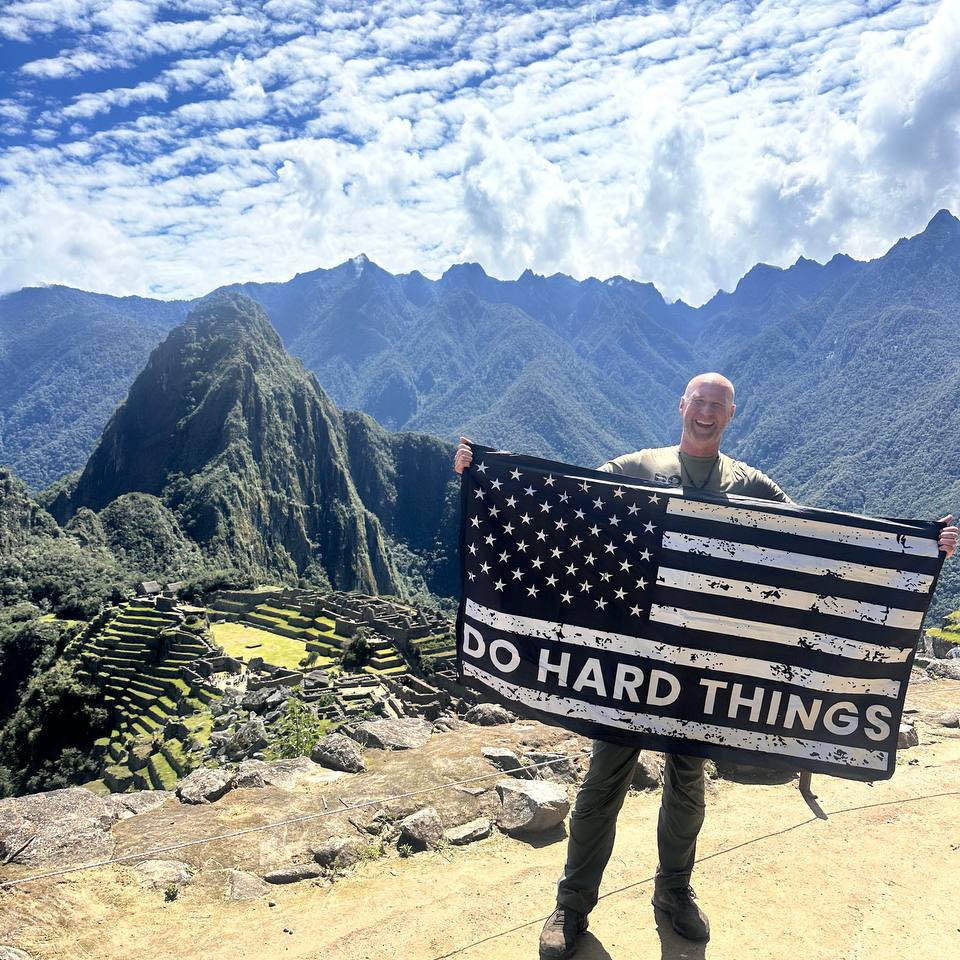
"I said I would go to Machu Picchu, so I did."
I got invited on a podcast a few weeks back. Real show, significant following on YouTube, and I was genuinely excited about it.
Ten minutes before we were set to go live, I got a message. Feeling under the weather, need to reschedule. That's fine. People get sick, and I said so.
We rescheduled two weeks out. This morning, ten minutes before the show, another cancellation. No explanation this time.
I'm not going to out the guy. He isn't the point, and honestly this isn't about him. He's just the example that happened to show up on my calendar this morning.
But I'll be straight about how it landed. The first one didn't bother me at all. The second one made me angry — and not because of the lost hour. I'd blocked the morning both weeks. Prepped both weeks. Moved a team meeting to make it work. Showed up early.
I come from a world where if you're on time, you're late. That's not a personality trait I picked up somewhere along the way. It got installed in me. Twenty-seven years in the Army, and the standard was never just be there. Be there early, be there ready, and if you can't make it, somebody knows before it becomes a problem.
So I sat at my desk being irritated for a while, and then I caught myself, because this isn't a character problem. It's a difference in standards. He wasn't being a bad guy. He was operating exactly to his standard. His standard just allows for that.
The first agreement
A lot of you have read The Four Agreements. The first one is be impeccable with your word.
Most people read that and hear don't lie. That isn't what it says.
Don Miguel Ruiz breaks the word apart. Impeccable comes from the Latin for without sin, and he defines a sin as anything you do against yourself. Which means the first agreement was never about the other guy at all.
Being impeccable with your word is about what breaking it does to you.
That reframe is what got me out of being annoyed and into something useful, because I've broken my word too. Everybody has. So the question stopped being whether that host is a flake, and became what it actually costs a man — every single time — to be flippant with his word.
There are two costs. One of them you'll never see.
The cost outside you
Most people are never going to tell you.
You break your word, they get annoyed, they mention it to their spouse, and then they quietly write you off. The invite doesn't come back around. The referral goes to somebody else. The deal you thought was warm just cools off and you never learn why.
Nobody sends you a bill for a broken agreement. There's no notification that says a man decided something about you today.
Your reputation is a pile of decisions other people made about you and never told you about.
And you go on thinking you're doing fine, because nothing visibly broke.
The cost inside you
This is the one that compounds, and it's the one Ruiz was actually pointing at.
Every time you say you'll do something and you don't, some part of you files it away. You move right past it — you had a good reason, it was a weird week, you'll get it next time. But something in you keeps the record, and the record says that what this man says and what this man does are two different things.
Now go set a real goal. Commit to the business, the race, the hard conversation, the new standard.
And some part of you won't buy in.
You'll call it fear, or bad timing, or a lack of motivation. It's none of those. It's an accurate risk assessment. The man making the promise has a track record, and you've read it.
That's the real cost of being careless with your word. Not the lost meeting. The lost belief in your own commitments.
The host this morning didn't just lose an hour with me. He spent a little more of his own conviction that he does what he says. He'll never connect those two things. Almost nobody does.
Honor it. Own it. Clean it up.
Honor it starts before you say yes. Most broken words begin as a yes you should never have given — a yes to be nice, or a yes to something three weeks out that felt free at the time. Three weeks out is not free. It's the same hour, just later. So slow down at the yes, because that's where the whole thing gets decided. If you can't commit, say so right there. "I can't commit to that" is a real answer, and people respect it a lot more than a yes you don't mean.
Own it when you break one, because you will. I do. Everybody does. Owning it means naming it with no excuse attached. I said I'd do this and I didn't. Full stop. The second you add traffic, or the kids, or how busy it's been, you've stopped owning it and started defending yourself. They can hear the difference, and so can you.
Clean it up, which is the part everybody skips. An apology is not a cleanup. An apology is free, and free things don't repair anything. Cleaning it up means doing something that costs you in order to make the other person whole — rescheduling on their calendar instead of yours, delivering early, eating the expense, driving over. The cost is the point. Ask them directly what would make it right, and then go do that.
How to call somebody out
This is where most men freeze. You don't want to be the guy who makes it weird, so you say nothing, they never learn, and you quietly write them off. That's the path of least resistance and it helps nobody.
Here's what I actually sent this morning, broken into its four parts.
Care. Open with concern rather than accusation. Hope everything's okay on your end. You mean it, and it sets the tone for everything after.
Facts. What happened, not what kind of person they are. Second time. Ten minutes out. No explanation this week. Those are facts, and they're hard to argue with. "You're unreliable" is a verdict, and the moment you deliver a verdict the conversation becomes about whether you're being harsh instead of whether they were late.
Cost. What it actually cost you, specifically. I blocked the time both weeks, rearranged my schedule, and moved my team meeting. Hours and logistics, not feelings.
Ask. End with a question they have to answer. Mine was where do we go from here. Now the ball is on their side of the net and they have to pick it up.
Care, facts, cost, ask. No insult anywhere in it — I never told him what kind of man he is — and the door stays open, because I did tell him I'm still happy to come on the show.
It took about four minutes to write and it was uncomfortable to send. That's the price of the standard. Saying nothing is free. Saying something costs you. Pay it anyway, because a standard you won't defend out loud isn't a standard. It's just something you complain about in the car.
Your field note
Two things this week.
Find one promise you've broken and never cleaned up — and it's probably one you made to yourself. Own it in one sentence with no because in it, and go clean it up.
Then find one person who's been flippant with their word with you, and you've said nothing about it. Care, facts, cost, ask. Four minutes. Send it.
Somebody out there has already decided something about you and never told you. That ledger's closed. Every agreement in front of you is still open.
Go do hard things, — Sig
Quote of the Week
"It is not the oath that makes us believe the man, but the man the oath."
— Aeschylus
Siegfried "Sig" Tiegs is a keynote speaker, high-performance coach, and co-author of the Amazon best seller Life on Offense: A Tactical Guide to Dominate Life and End Mediocrity. A retired Army Major with 27 years of service, he hosts the Do Hard Things™ podcast and coaches high performers at dohardthingscoaching.com.
Field Notes is a series of quick dispatches from real life — the small moments that carry the bigger lessons. dohardthingscoaching.com
Don't miss a beat!
New moves, motivation, and classes delivered to your inbox.
We hate SPAM. We will never sell your information, for any reason.