
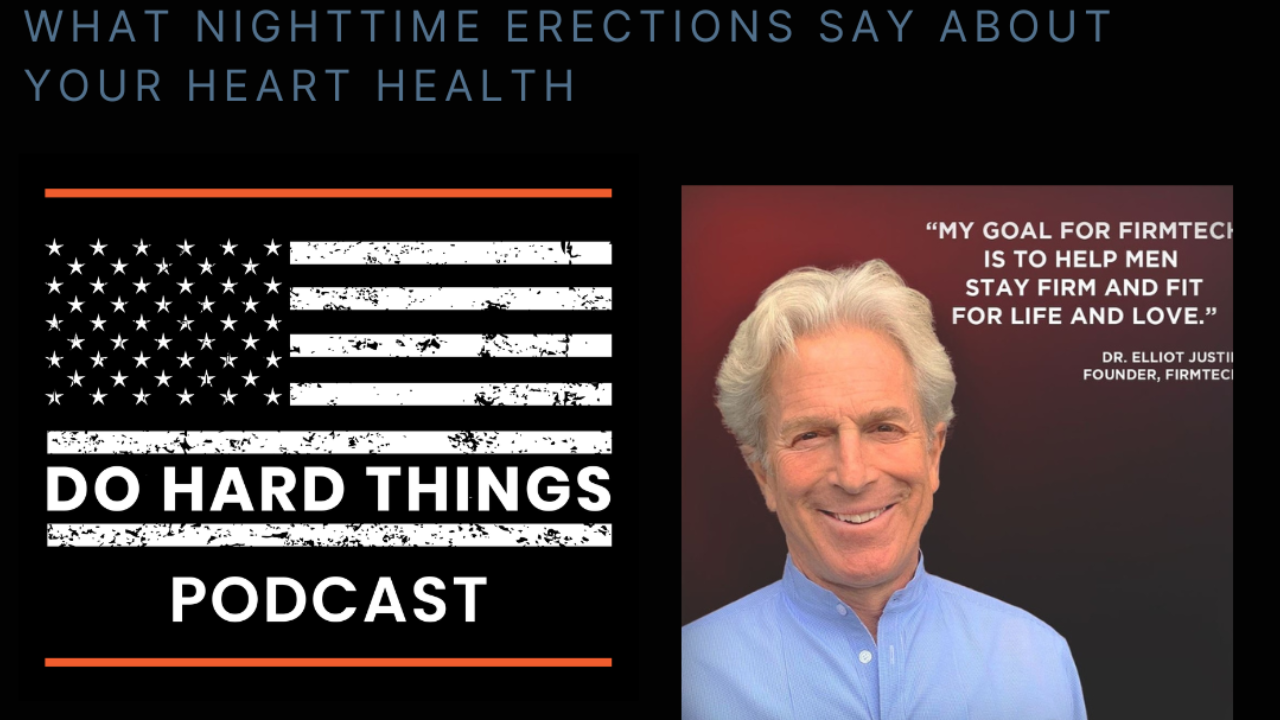
The Canary in the Coal Mine: What Your Nighttime Erections Say About Your Heart
Oct 27, 2026You track your miles. You track your heart rate, your sleep score, your macros. But there's one number most men never check, and it can warn you about heart trouble way before you feel a thing.
Your nighttime erections. How many you get, how long they last, how firm they are.
Doctors call it the canary in the coal mine. I sat down with Dr. Elliot Justin, founder, inventor, and CEO of FirmTech, to talk about why this number matters to your overall health. If you're a woman, this directly impacts the health of the man in your life.

From the ER to the canary in the coal mine
Elliot spent 25 years in emergency medicine. That work got him interested in remote patient monitoring: wearables people use at home to get early signals about their health, so they rarely end up in the hospital.
Then he broke six vertebrae riding horses. His spinal cord was fine, but the injury got him reading about how doctors rebuild sexual function after spinal damage. He tested an implanted electrode on two rams. Then he had a urologist at UCSF implant one by his own pudendal and cavernous nerves. He felt nothing but some tingling.
About four years ago, a professor at the University of Utah heard the story and told Elliot he wanted to count the nocturnal erections men have. Elliot asked why anyone should care about morning wood.
The answer: a man's nocturnal erections are a leading indicator of his cardiovascular and sexual health.
In medicine, Elliot says, we mostly treat associations. High blood pressure is associated with stroke. Elevated lipoproteins are associated with atherosclerosis. Those aren't predictive. Nocturnal erections are different. According to Elliot, if the number, duration, and firmness of a man's nocturnal erections drop by 50%, that man has close to a 50% chance of a heart attack or angina in the next two to three years.
That's another vital sign. And to most men, a lot more important than a fluctuation in pulse or blood pressure.
What healthy looks like
A healthy man has three to five nocturnal erections a night. Each lasts about 45 minutes. On FirmTech's 1-to-10 firmness scale, they should be around a 6.
That's close to two hours a night with an erection. Most men have no idea how many they had last night. I didn't.
Why do they happen? Elliot's honest answer: we don't fully know. At night, the sympathetic nervous system (fight or flight) turns off, and the parasympathetic system runs unopposed. They tend to show up during REM sleep, and they often have nothing to do with sex dreams. The textbook explanation is that the body is feeding blood to the penis overnight. Elliot says nobody has really proven that.
What we do know is that the numbers matter. FirmTech's database covers about 4,000 men. Most of the men with poor nocturnal erections have significant diabetes or hypertension, two of the leading causes of cardiovascular disease.
As Elliot put it, all of us are on the road from erectile fitness to erectile dysfunction. We just don't know where we are on that road, because we don't have a dashboard.
 Most ED isn't ED
The conventional wisdom says 40% of men have erectile dysfunction by 40, and it climbs 10% per decade after that. Elliot says his data doesn't back that up. Most men diagnosed with ED, by themselves or by a doctor, don't actually have it. They're just getting older. We've pathologized aging.
In FirmTech's data, men aged 50 to 70 who were diagnosed with ED averaged a 9.2 in firmness. Men the same age who weren't diagnosed averaged 9.5. Only the machine can tell that difference.
Here's where it gets dangerous. Men get embarrassed, skip the doctor, and buy pills online. Those pills can mask the signal of a real cardiovascular or diabetic problem. Elliot quoted Dr. Mohit Khera of Baylor: Viagra is Vicodin. It treats the symptom and hides the cause.
Elliot splits the problem in two.
- Can't get it up. If you're not drunk and you keep struggling to get an erection, you're not getting blood in. Treat that as a cardiovascular or diabetic problem until proven otherwise, and see a doctor.
- Get it up, then lose it. That's most men as they age. Stress about the mortgage, a fight with your wife, the fourth cocktail, blood pressure meds, SSRI antidepressants. The goal here is keeping blood in.
For the second group, Elliot says a ring does what a pill can't. He points to two papers showing erection rings are twice as effective as tadalafil (Cialis) at sustaining erections, and they work best together.
His analogy: if your sink leaks, a good plumber replaces the gasket. Taking a pill for an erection you can't keep is like your plumber telling you to turn the tap up.
Testosterone, done right
Elliot's first piece of advice: if you're under 50, get your testosterone baseline now. It's not part of a standard exam, and it should be. When you're 70, you'll want to know what your number was at 40.
Ask for free T, not just total T. Free T is the testosterone your body can actually use. Elliot targets a free T above 20, ideally in the 20 to 35 range, the range of men in their mid-20s to early 40s. Who wants to be a C student?
Then he doses to outcomes, not to a number. He tracks three things:
- Strength. He expects a man starting testosterone to gain 10 to 15% in strength with resistance training, then plateau. A tape measure on your biceps and chest will show it.
- Libido. How often are you initiating sex, and what's your goal? Several times a week, down to once a week, is a signal.
- Nocturnal erections. With the TechRing, he can watch a man go from two nocturnal erections to three, and from a 7 to a 9 in firmness.
That's the power of wearables. You become an N of one.
The same goes for blood pressure. When Elliot's doctor put him on lisinopril, his firmness dropped from a 10 to an 8.5. Neither he nor his wife could feel the difference. The machine could. He talked to his doctor and switched medications. That's a conversation worth having with yours.
Overtraining, alcohol, and your numbers
A lot of you run, ruck, and push hard. Probably too hard. So I asked whether overtraining shows up in the data.
It does. When Elliot rides 20 to 25 miles hard on horseback, his nocturnal erections are weaker that night. He suspects catecholamine depletion. Endurance athletes using FirmTech report the same thing, only more extreme, while they recover from an event. And after five or six hours in the saddle, Elliot is less likely to initiate sex.
That doesn't mean stop training. Fitness matters for sexual performance. Being out of breath after a few thrusts is a problem too. It means recovery shows up here, and you can see it.
Alcohol and cannabis both hurt the numbers, and alcohol looks dose-related. Elliot used to sip four-plus ounces of good liquor at night. When he saw what it did to his nocturnal erections, he cut back to two ounces, diluted. His numbers got stronger. If it's hurting blood flow to your penis, it's hurting blood flow to your brain, heart, and kidneys too.
Some FirmTech users have found their personal alcohol threshold from the data. You need about a 7 out of 10 to penetrate and an 8-plus to enjoy sex. Guys email Elliot saying half a bottle of wine was a mistake, and four ounces is their line.
If that's the motivation someone needs to cut back, there you go.
Get your data
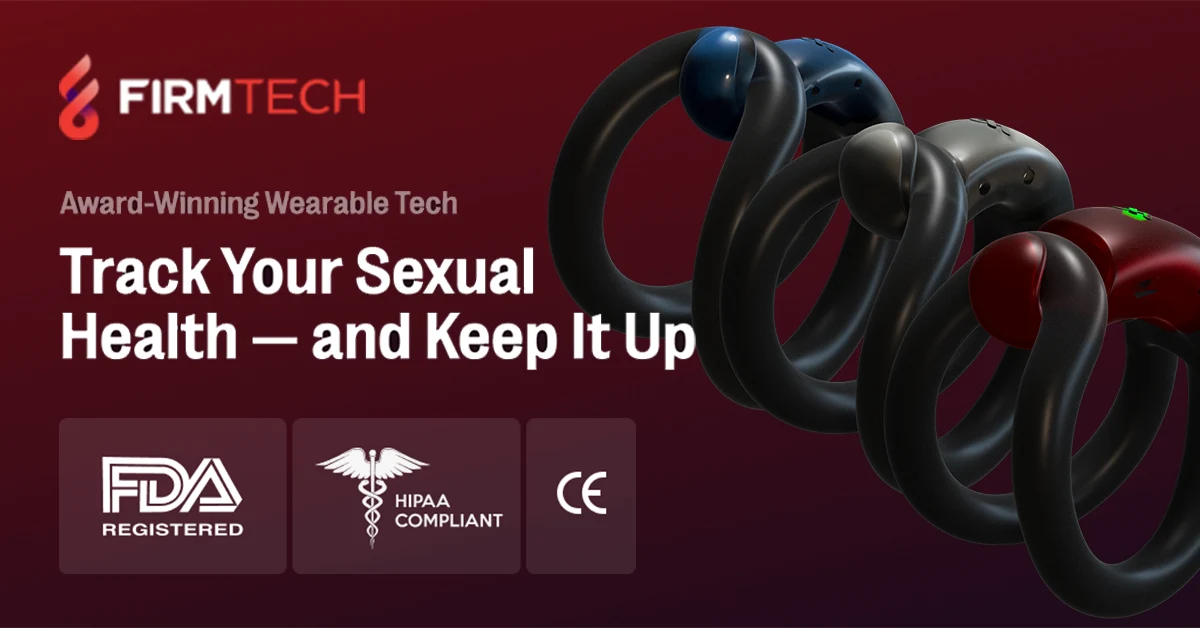
The TechRing is a soft, stretchy elastomer ring with two sensors inside: a pressure sensor and a strain gauge. As the penis expands, the sensors give a computer two data points to turn into a 1-to-10 firmness score. Elliot estimates the rings have been used more than 1.5 million times, overnight or during sex, with zero complications.
You don't wear it all day. FirmTech recommends at least three overnight recordings plus one or two during sex, solo or with a partner, to get a picture of your sexual health. Then you follow the trends.
There are seven published papers using FirmTech's technology, with 21 more studies underway. A women's product, the Clitique, is expected in February.
Elliot's summary: men, put a ring on it. For your sexual health, for data about your heart, and to optimize your performance.
Here's my take. Healthcare is mostly reactive. This is preventive. It's another data set worth measuring and monitoring for your own health, and you get the side benefit of a better sex life.
Learn more at myfirmtech.com or reach Elliot at [email protected].
Listen to the full conversation on the Do Hard Things Podcast.
This post is for educational purposes only. Talk to your doctor before changing any medication or treatment.
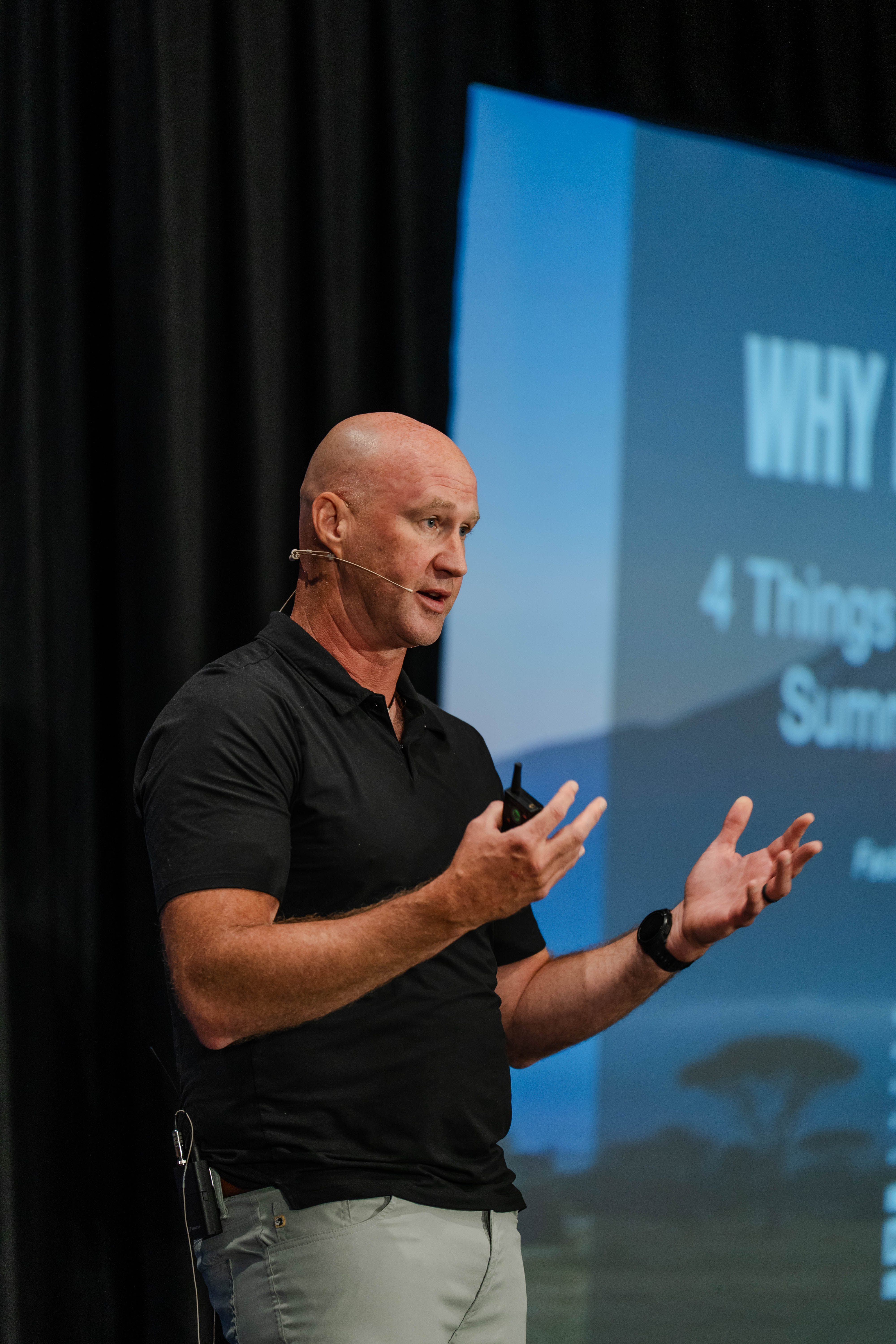
Siegfried "Sig" Tiegs is a keynote speaker, high-performance coach, and co-author of the Amazon best seller Life on Offense: A Tactical Guide to Dominate Life and End Mediocrity. A retired Army Major with 27 years of service, he hosts the Do Hard Things™ podcast and coaches high performers at dohardthingscoaching.com.
Don't miss a beat!
New moves, motivation, and classes delivered to your inbox.
We hate SPAM. We will never sell your information, for any reason.