
Gratitude Is a Performance Tool with TJ Sweet
Nov 02, 2026Slow Down Long Enough to Notice
You can hit every goal. You can crush every number. You can build the business. And you can still feel like something's missing.
Most driven people skip a critical step. They never slow down long enough to notice what's already good in their life.
So on this episode of the Do Hard Things™ Podcast, we talked about gratitude. Yep, gratitude. On a podcast about doing hard things.
For a lot of high performers, myself included, slowing down can be one of the hardest things you do. But it's necessary if you want to find peace in your life. If you're always chasing the next thing and feeling frustrated, this one's for you.
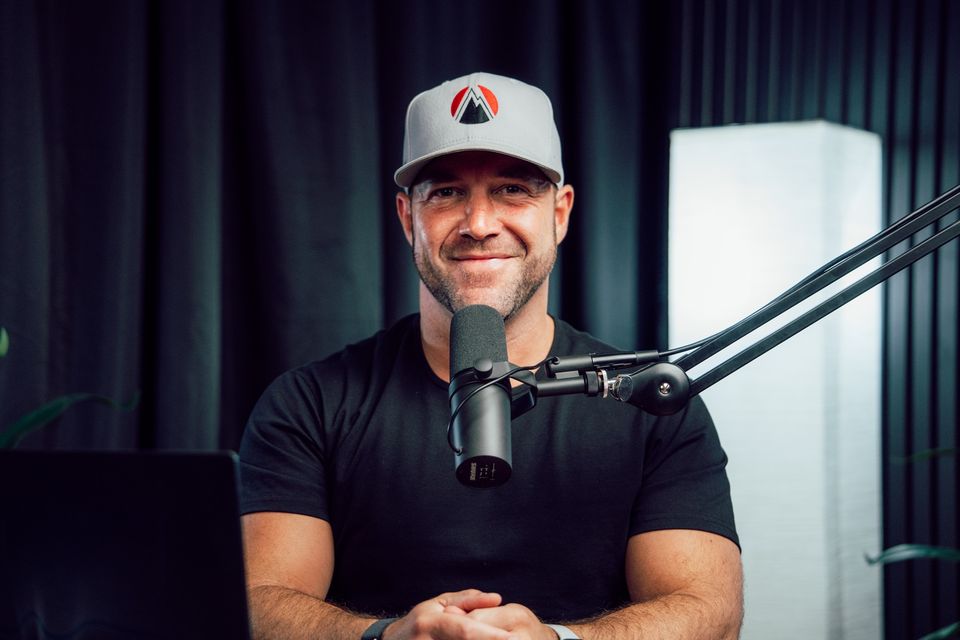
My guest was TJ Sweet. He's a human connection keynote speaker, an author, and the host of the Living the Sweet Life podcast. For more than 20 years he's led teams and coached leaders, and he helps leaders build cultures people never want to leave. On a personal note, I'm thankful for TJ. He helped inspire me to face my own fear and get into the speaker network.
He Learned It the Hard Way
In his twenties, TJ was an achiever. He could work 6 a.m. to 10 p.m. every single day. His family in St. Louis would invite him to barbecues and birthday parties, and he'd find other things to do. "Not because I didn't love them," he said. "Because I was just so busy working on my goals."
He was pursuing golf at the time. If he took a day off, he felt like he was letting the competition get ahead of him.
When one of his grandmas wasn't doing well, his mom called and said he should come see her. He said he couldn't. He had a tee time. She passed that week.
"That struck me, but it didn't impact me," TJ said. "It just touched my logical brain."
He also had a dog at home. Her name was Bertie. He moved into his house and got Bertie the same day. She was his best friend. But he treated her like an obligation. He had to walk her. He had to stop doing what he wanted to be doing and go home to take care of her.
When Bertie was about nine, she stopped eating for two days. The vet gave her a steroid shot to see if it would buy one more day. On the drive home, the only thing TJ had on his heart was shame and regret for how he'd treated her. She sat in the backseat, so thin, still looking at him, excited to see him, wanting him to pet her. He fell asleep crying that night, hoping for one more day.
At four in the morning, Bertie came dancing at the foot of his bed. He poured food in her bowl, and she ate it. He poured another cup, and she ate that too.
"I thought, I'm never going to take her for granted," he said. "I don't know how many days I'm gonna get with her, but I know how I'm gonna spend the days that I do have with her."
She got all the dog walks. All the treats. Human food. On March 19th, he threw her a birthday party at the dog park, just the two of them, with a cake that said Happy Birthday, Bertie. He didn't know it would be her last.
On April 2nd, she got a bump on her head. By April 12th, she was in pain and couldn't sleep. On the cold vet floor, she put her head in his hand. "It was the heaviest head that I've ever felt," TJ said. It was osteosarcoma, eating through her skull. Ten days from asymptomatic to symptomatic.
What TJ had on his heart that day was gratitude for every moment of those last six months. He'd gotten to show her how much he loved her. He called it a free pass.
When he got home, her food bowl was there. Her toys were there. She wasn't. "That sound of silence in the house was deafening," he said. "It was the loudest noise I've ever heard."
"I don't know how many people I'm gonna get to have in my life, but I know I'm never gonna treat anyone like an obligation ever again."
A month later, his dad called. TJ's other grandma was in a nursing home and wasn't doing well. This time TJ said, "I'll be right there." He drove to St. Louis. She hadn't really acknowledged anyone in two weeks. She looked at him, smiled, and said, "I love you, and I'm so glad you're here." She died later that week.
The Eyes in the Driveway
That story made me think about the pets I've had over the years and how I treated many of them as obligations. Earlier this year I took our cat Joey to the vet for the last time. I really liked that cat. That softened me in a way that opened my heart to the other pets we've had.
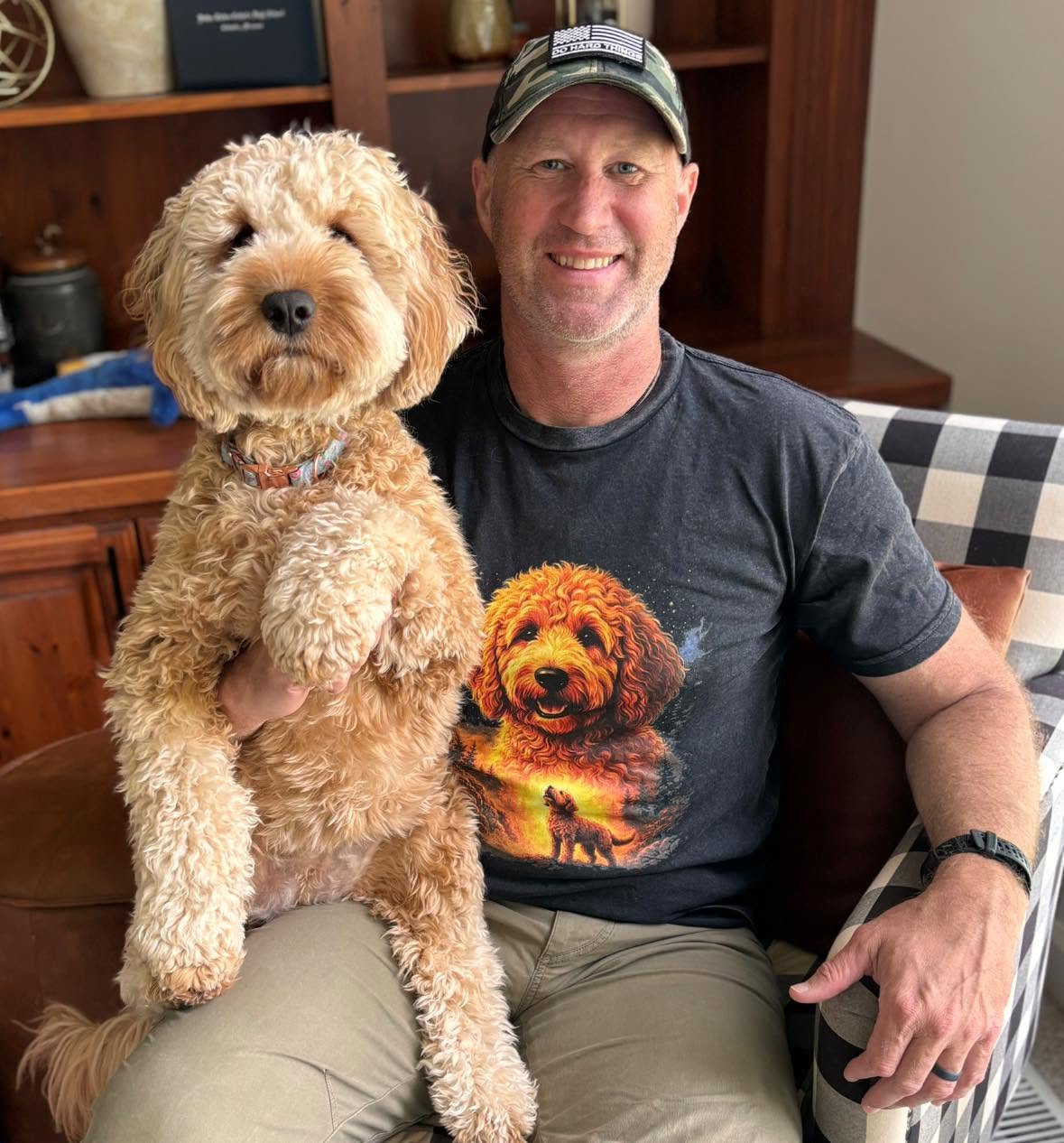
Now we've got Dolly, a goldendoodle who's just over a year old. She loves everyone in the house, but she favors me. When we got her, I thought, okay, it's another pet. Another obligation. Makes the family happy. But I can walk out to take out the trash, come back in, and she greets me like she hasn't seen me. I had to shift my own paradigm. This is genuine love. I still have more work to do.
I also had a little health scare the weekend before we recorded. Being in the hospital was eye opening. Tomorrow's not promised for any of us. There's always work. There's always tee times. But if you get on that treadmill of constant production and never slow down for gratitude, you end up frustrated for long stretches of time. I've been there.
TJ doesn't want to put down achieving. "I just don't want achieving to be at the sake of the people you love the most," he said.
We think we'll find fulfillment on the other side of achievement. TJ sees it differently. Fulfillment is when you're backing out of the driveway, and you look at the eyes of the people watching you leave for work, who can't wait for you to be back.
"It's not in the office," he said. "It's in those eyes and those smiles and those waves and that one more hug."
Is it money? Sure, to experience life with those people. A car, a house, a trip? Yeah, with them. "With them is always the answer," TJ said. "But we have to choose that intentionally."
 Three Levels of Gratitude
The heart change happened fast for TJ. The practice took longer. At first, his gratitude came with a "better take care of it while you have it" feeling. Scarcity. Live like you're dying, all the time.
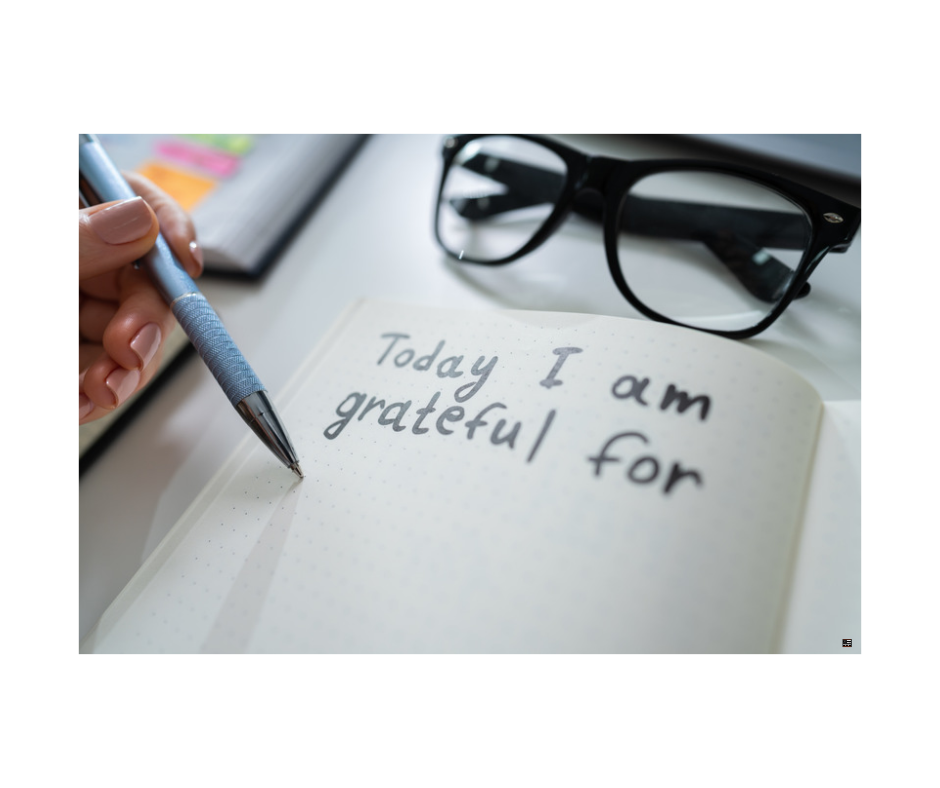
Then he started a habit. Write down three things he's grateful for. Two things he appreciates about himself, as I am statements. And one positive quote to focus on every day.
I see a trap with my clients, and I fell into it myself. You write down three things you're grateful for. Over time, it's the same three things. Then it's a to-do list. The point is to feel gratitude. When you take the time to feel it, you can't feel anything else but really good. That takes deliberate practice.
TJ's rule: if it feels like a chore, there isn't enough meaning behind it yet. Here's the practice he teaches. It took him more than 11 years to learn.
- Write down one thing you're grateful for. A person, or even a thing, like the hat you're wearing or the microphone you're using. Then ask who's connected to it.
- Write down why. Why does it matter to you?
- Write down how you'll show it. How can you show them gratitude so they experience it? The power is when gratitude is shared and received.
This works for things, too. When you attach meaning to something, you're a better steward of it. You take better care of it. It isn't the next thing that ends up in the garage sale.
I wear a hat that says SIG. My friend Corey Saylor kept telling me she had a hat for me. Then she came up to support us during the MR340 and gave it to me. It references Sig Sauer, a gun I like and own. It has my name on it. It fits perfectly. I've got a lot of hats. This one means a lot to me because of who it came from.
TJ wears a bracelet his ten-year-old nephew made. To everyone else, it's a piece of yarn. His watch was a gift from his parents when he graduated college. "It's not just a watch," he said. "It's my people."
One more thing: be patient with yourself. TJ sees people get in a hurry to become a grateful person. Be gracious with yourself as you learn the feeling of deep gratitude, out of love, hope, courage, and optimism, instead of shame and regret.
Gratitude Isn't Soft
Gratitude can sound soft to a lot of driven people. So I asked TJ why it's a performance tool.
There's a place for gratitude and ambition together, he said. The problem with ambition alone is you climb to the top of the mountain, look around, and nobody's with you. An empty summit.
"If you aren't grateful now with wherever you are, you won't be grateful then." You don't become a grateful person when you reach the top. You get there and say, "Well, now what?"
When you're grateful for the people and the training and everything it took to get there, you want to bring other people with you. You want to create more experiences. You want to achieve more because you're in a state of abundance, instead of a state of lack.
Performing from lack sounds like this: I hope I don't miss this shot. I hope my bike doesn't get a flat tire. TJ says people who struggle under pressure are often thinking their identity is on the line. The people who succeed the most are grateful for the chance to be there. Grateful for the reps. Grateful for their coaches. Grateful for being healthy.
Watch anyone who wins. The Super Bowl, the Tour de France, Kona, the MR340, an actor, a musician. The first thing they do at the mic is express gratitude. They pull out a piece of paper with a list of names. They're at the peak, and they're saying thank you.
"For all the people saying it's soft to say thank you and it's soft to be grateful," TJ said, "it's really hard to think you did it all on your own."
A Culture People Never Want to Leave
I love military culture, but it had challenges. One was the treadmill. You did this, now it's on to the next thing. There was no time to slow down and celebrate the wins. That can become a learned behavior if you're not careful. It did for me.
TJ's approach starts with seeing your people as people first and employees second. They already know they're there for the job. They already know their performance matters. Leaders don't need to see them through that lens.
For TJ, a culture people want to stay in has three things. Every person knows they matter to the team. It's psychologically safe to have good days and bad days, and there's a plan for those days. And the team is deeply united in why they show up in the first place.
He flips the pyramid. His goal is to help his people become their best, even if that means leaving to lead another team, chasing a dream job, or opening a business. When someone told him they wanted his seat, he'd say, "Great, how can I help you?" Then he'd start pulling them into meetings and walking them through his thought process.
"Every single person on your team right now, no matter who is listening, no matter what business you're in, every single person is somebody's most important person in their life."
The key is that gratitude has to be seen, not just heard. When someone says "I'm grateful for you" and acts in no way grateful, it creates dissonance. And then there's no trust.
This isn't toxic positivity. It comes with high accountability. TJ had accountability conversations, and some people left his teams. When someone who isn't of the culture leaves, the culture gets stronger. People start saying "us." We aren't the ones who talk about people. We aren't the ones who show up late. We aren't the ones who cut corners.
"Great leaders don't create followers," TJ said. "Great leaders create leaders." Culture comes from how you speak to each other, how you course correct, how you hire, how you discipline, how you celebrate, and how you point to purpose. Be a grateful leader, and you'll create other grateful leaders.
The words you use matter, too. I once sat in an auditorium during one of the Army's large moving cycles and heard a high-ranking officer refer to us as inventory. It put a bad taste in my mouth. I'll never refer to anybody as inventory. As TJ put it, when you see people as people first and employees second, you never accidentally say inventory.
When the Season Is Hard
I've been working with someone who's going to lose a family member. Every time we talk, he tells me what he's grateful for. But I can sense him trying to grasp onto gratitude while the sorrow is overwhelming. So I asked TJ what someone in that season can do.
"Feel it all," he said. "Don't try to numb it by being grateful for it."
Forcing gratitude through a heartbreaking chapter can feel disingenuous. Then you think, what's wrong with me? Why can't I find something to be grateful for? TJ says maybe the outcome of gratitude in that season is presence.
Acknowledging something is the first step to handling it. Name it. Live with it. Numbing it is the best way to keep it. Ask yourself: who am I grateful for that I can connect with and just be with? Losing a family member is hard. Doing it alone is really, really hard.
Let People Help You
That means letting people care for you. For a lot of men, that's hard. I'm the giver. I'm the provider. TJ admitted he's working on this himself. A friend called him on it.
"When you never allow anyone to help you, you decrease the chances of someone else actually asking for help," he said. It becomes an imbalanced relationship. People think, I don't want to bother them, because they never need anything from me.
If you say you love to help people, TJ's first question is: how often do you let people help you?
Here's what I've learned as a giver. It feels really good to help someone. If you never let them help you, you deny them that same feeling.
TJ also asks people to think about why they don't ask for help. Is it because you don't need it? Or is it because you needed it from people you trusted and loved, and never got it? Open up your heart again. That's where community and connection come from.
At the end of life, people talk about two things: the people in their lives, and the contributions they made to others. Both tie directly into gratitude.
Ask the Question
TJ's message to anyone listening: it's not too late to start. It's not too late to slow down and pay attention to the people you love the most.
Then ask them a powerful question: "When do you feel the most loved by me?"
Ask your wife, your partner, your friends. When they ask why, tell them: "Because I want to make sure that you always know that I'm here for you, that I see you, that I value you, and I love you." Then give them space to think. And be ready to do something with the answer.
"The hardest thing is to live in regret," TJ said. "The hardest thing is for someone to not experience your love in the way that you meant."
When we lose somebody, we want to hug them one more time. Tell them I love you one more time. We get the chance today to do that in a way they experience it.
So slow down. It's never too late to start.
You can connect with TJ at tjsweet.com and @thetjsweet on every social media channel.
If this episode helped you, share it with someone. Join the free Do Hard Things Nation Facebook page, where we post a daily hard question and journal prompt. Find merch and upcoming events at dohardthingsnation.com. If you want to go further, our team of coaches can help at dohardthingscoaching.com. And grab a copy of Life on Offense.
Keep doing hard things. Grateful for all of you.
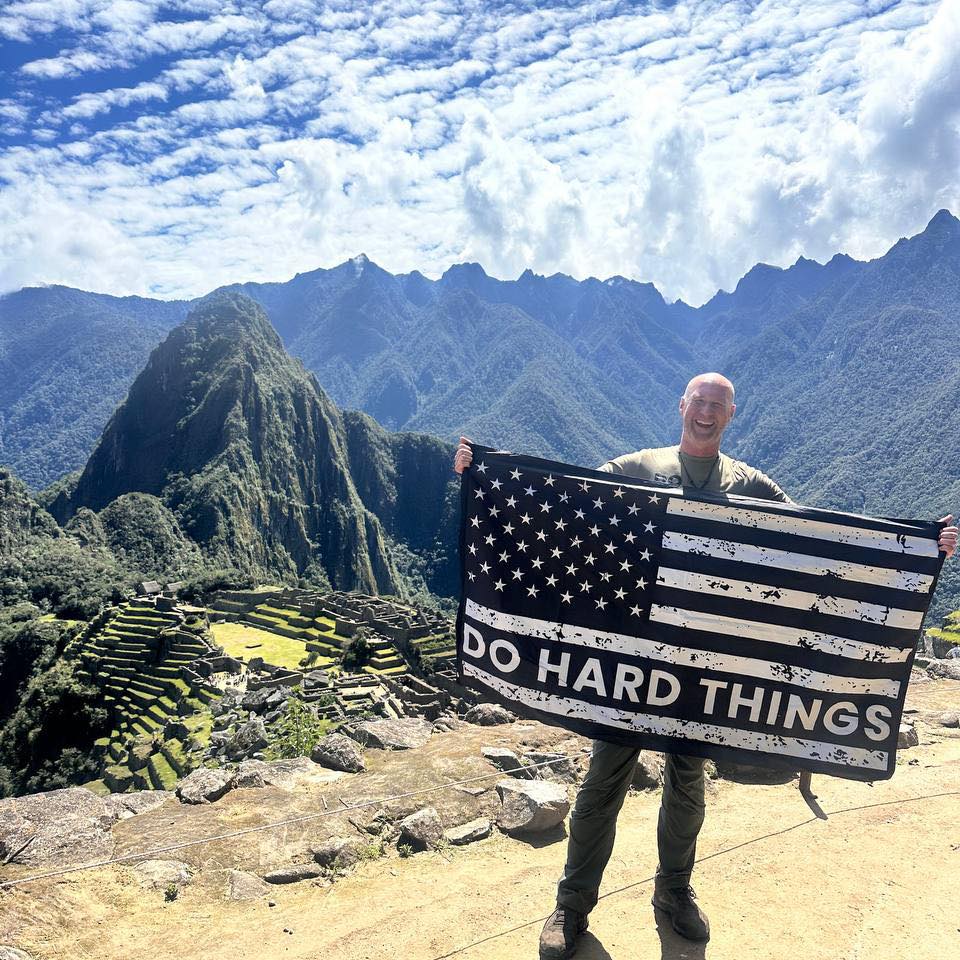
Siegfried "Sig" Tiegs is a keynote speaker, high-performance coach, and co-author of the Amazon best seller Life on Offense: A Tactical Guide to Dominate Life and End Mediocrity. A retired Army Major with 27 years of service, he hosts the Do Hard Things™ podcast and coaches high performers at dohardthingscoaching.com.
Don't miss a beat!
New moves, motivation, and classes delivered to your inbox.
We hate SPAM. We will never sell your information, for any reason.